AI agents and AI workflows for multi-step business processes
AI agents extend classical automation with the ability to make decisions, interpret information and run multi-step processes autonomously. Kaufman AIS designs Agentic AI systems along your real workflows, integrates them with your existing applications and operates them on a sovereign, auditable architecture.
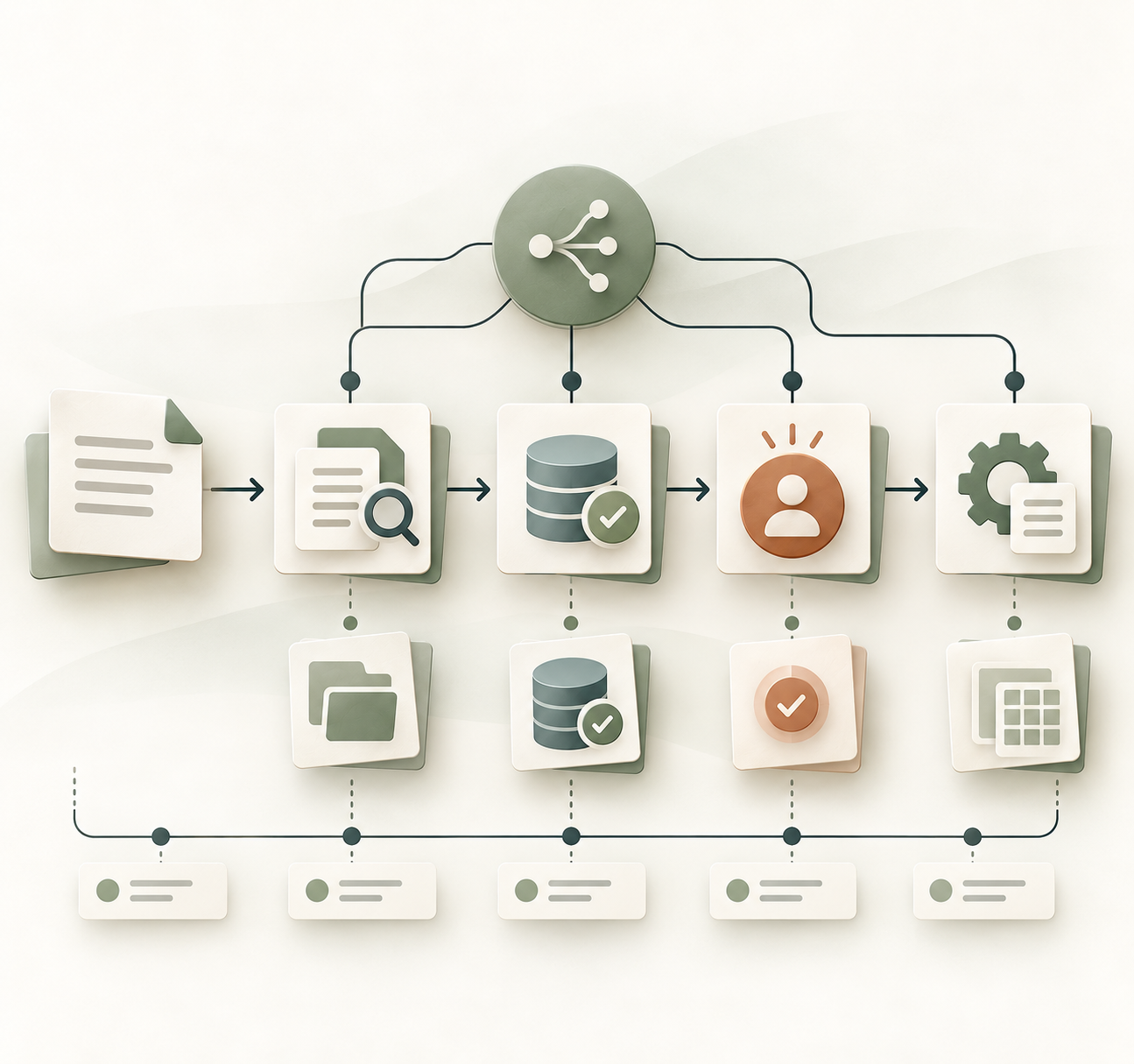
Why classical automation reaches its limits
In growing organizations processes emerge that are too complex for classical workflow engines and too repetitive to claim the full attention of qualified staff. It is exactly this gap where companies lose speed and quality today.
- Tasks are spread across multiple systems such as ERP, CRM, DMS, email and line of business applications, and can only be represented rigidly by classical workflows.
- Knowledge from documents, cases and communication has to be interpreted manually before a process can continue.
- Standard RPA solutions break as soon as input formats, layouts or special cases change.
- Qualified specialists spend a considerable share of their time on routine tasks that no longer require substantive decisions.
- Pure chat solutions produce answers but do not trigger processes and do not connect systems.
The Kaufman AIS solution
We design AI agents and workflow systems that intervene precisely where decision-making, system integration and knowledge access meet. Agents operate within clear guardrails, with documented steps and fall-back paths into the human process.
- Multi-step workflows in which agents retrieve, validate, enrich and forward data and execute actions in target systems.
- Connection to ERP, CRM, DMS, SharePoint, Microsoft 365, Confluence, databases and industry systems via established connectors.
- Knowledge grounding through RAG systems and enterprise knowledge systems, so that agents work on your actual data situation.
- Clear limits, defined escalations and approval steps for actions with high impact.
- Operated on European infrastructure, optionally with private language models, fully GDPR compliant.
The benefits of productive AI agents
A well-designed AI agent is more than a chatbot with tools. It changes how knowledge work is organized within a department and meaningfully relieves qualified employees.
Building blocks and tools of our Agentic AI architecture
We combine proven workflow engines with modern agent frameworks and a controlled model layer. Which building blocks are used depends on your system landscape, your compliance requirements and the desired depth of autonomy.
Workflow platforms
For deterministic steps and integration we rely on n8n, which has established itself as a European workflow platform that can be run sovereignly in container environments. Depending on the existing systems we additionally integrate Microsoft Power Automate, Camunda or selectively tools like Make. This covers the spectrum from simple connections to complex process orchestration.
Agent frameworks
For decision-capable agents we work with frameworks such as LangGraph, LangChain, CrewAI, AutoGen and Microsoft Semantic Kernel. These make it possible to model agents with clear roles, tools, memories and escalation paths, instead of running them as a black box.
Model layer
We combine high-performance models from leading providers with European model offerings and private open source models, for example from the Llama or Mistral families. Which models are used depends on the use case, compliance and economics. See the Sovereign AI page for details.
Knowledge and data integration
Agents access your documents and master data through RAG systems, read emails and tickets, check master data in ERP and CRM and work with content from SharePoint, Confluence and industry systems. Permissions from the source systems are respected consistently.
Control and observability
We rely on structured logging, tracing of individual agent steps, defined approval points and dashboards. You can see what an agent is doing, what it bases its actions on and where it currently needs a human or escalation.
Security and rights layer
Agents receive clearly defined technical identities, dedicated service accounts and a role model that limits their actions. High-impact actions such as orders or shipments go through explicit approvals.
Typical use cases for AI agents in enterprises
We deploy agents where knowledge work, system gaps and recurring tasks meet. Sectors such as industry, mechanical engineering, logistics, finance, healthcare and professional services benefit particularly.
Document processing
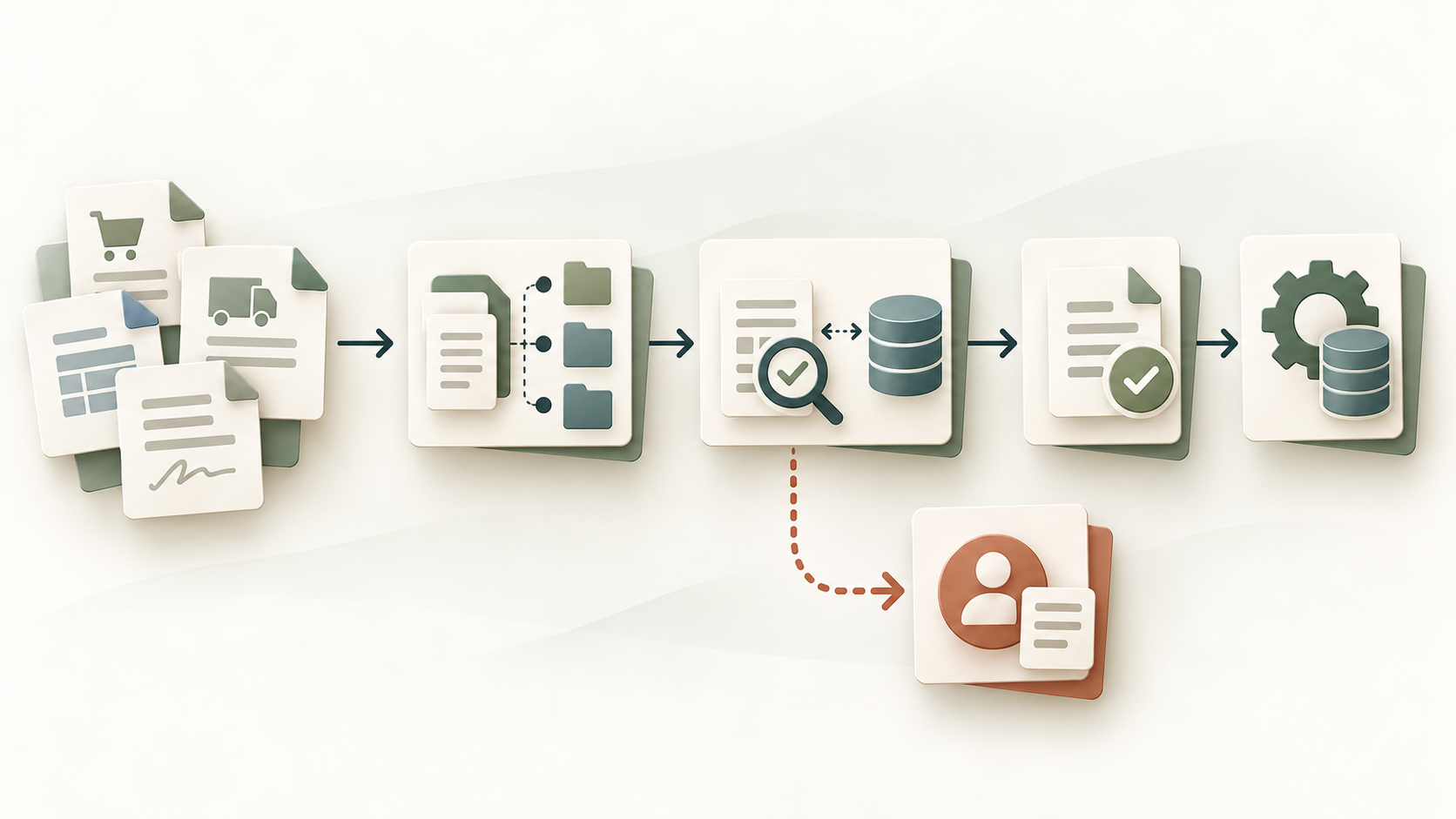
Incoming orders, delivery notes, invoices, contracts or inquiries are classified, validated, matched with master data and processed in downstream systems, with clearly marked exceptions for humans.
Service and support
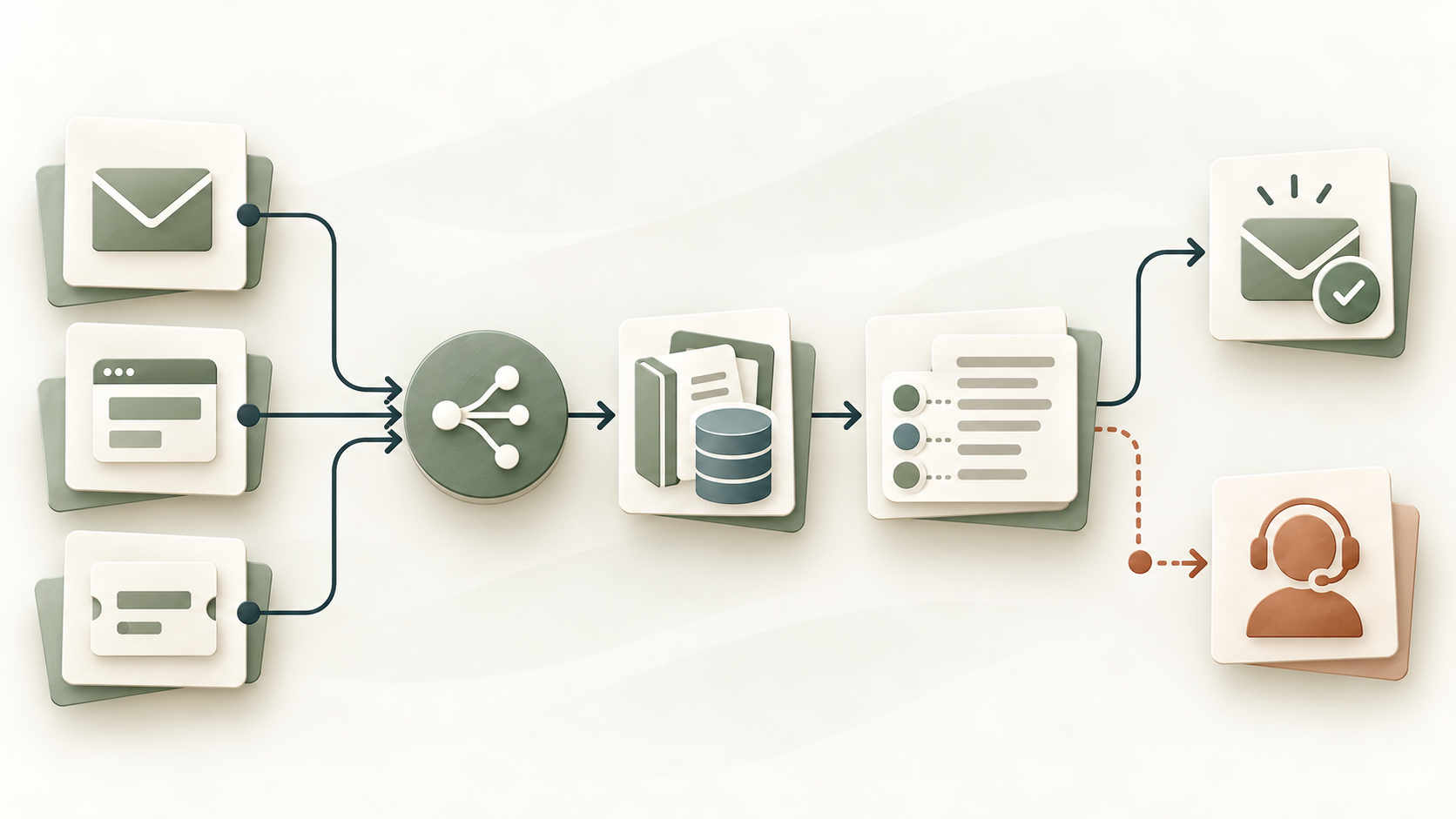
Requests from email, portal or ticket systems are analyzed by the agent, routed to the right knowledge source, enriched with suggestions or answers and escalated to the relevant person when needed.
Sales and pre-sales
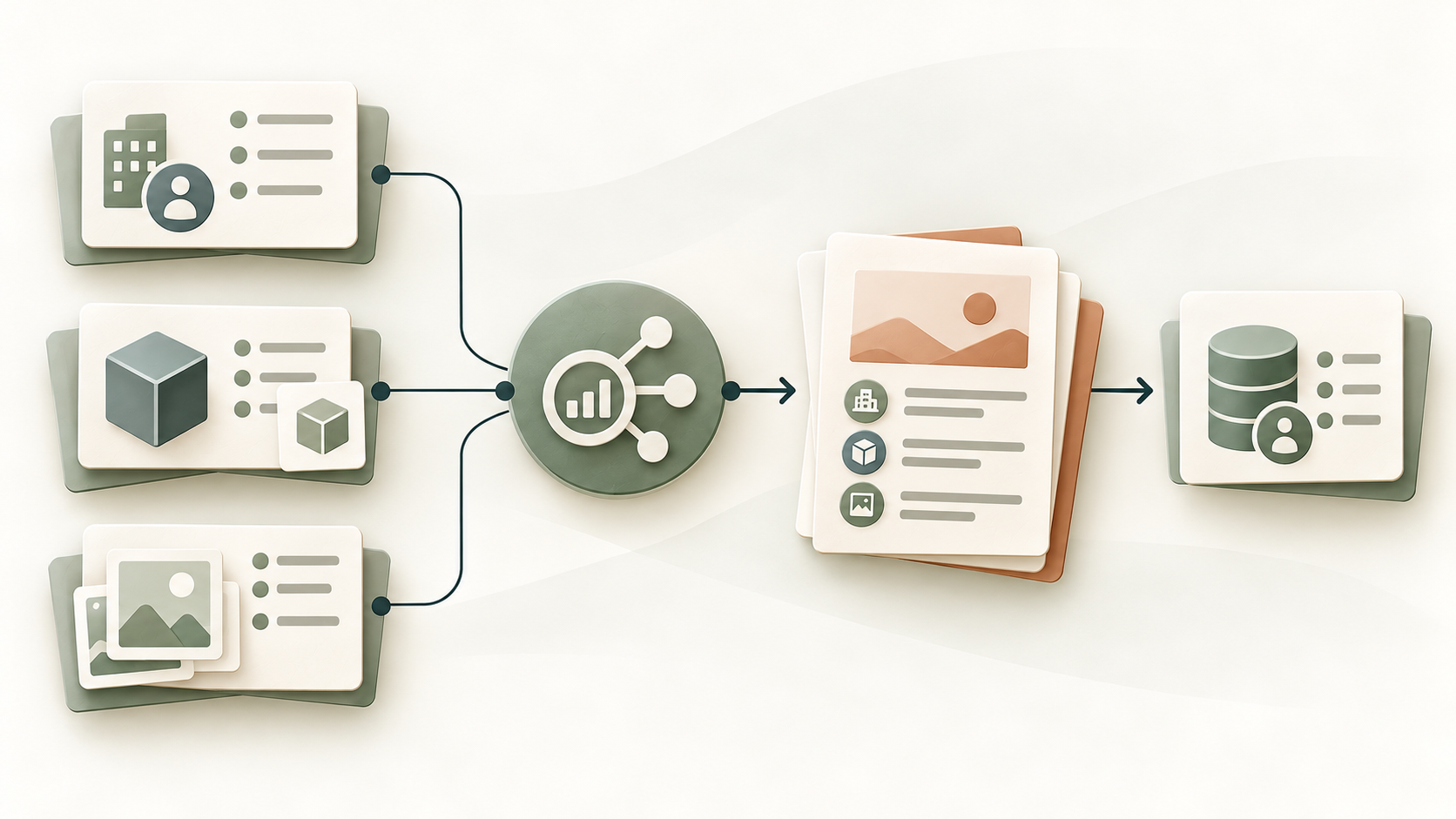
Agents support sales with research, proposal preparation, account updates and access to product knowledge and references, always based on your data.
Engineering and service technology
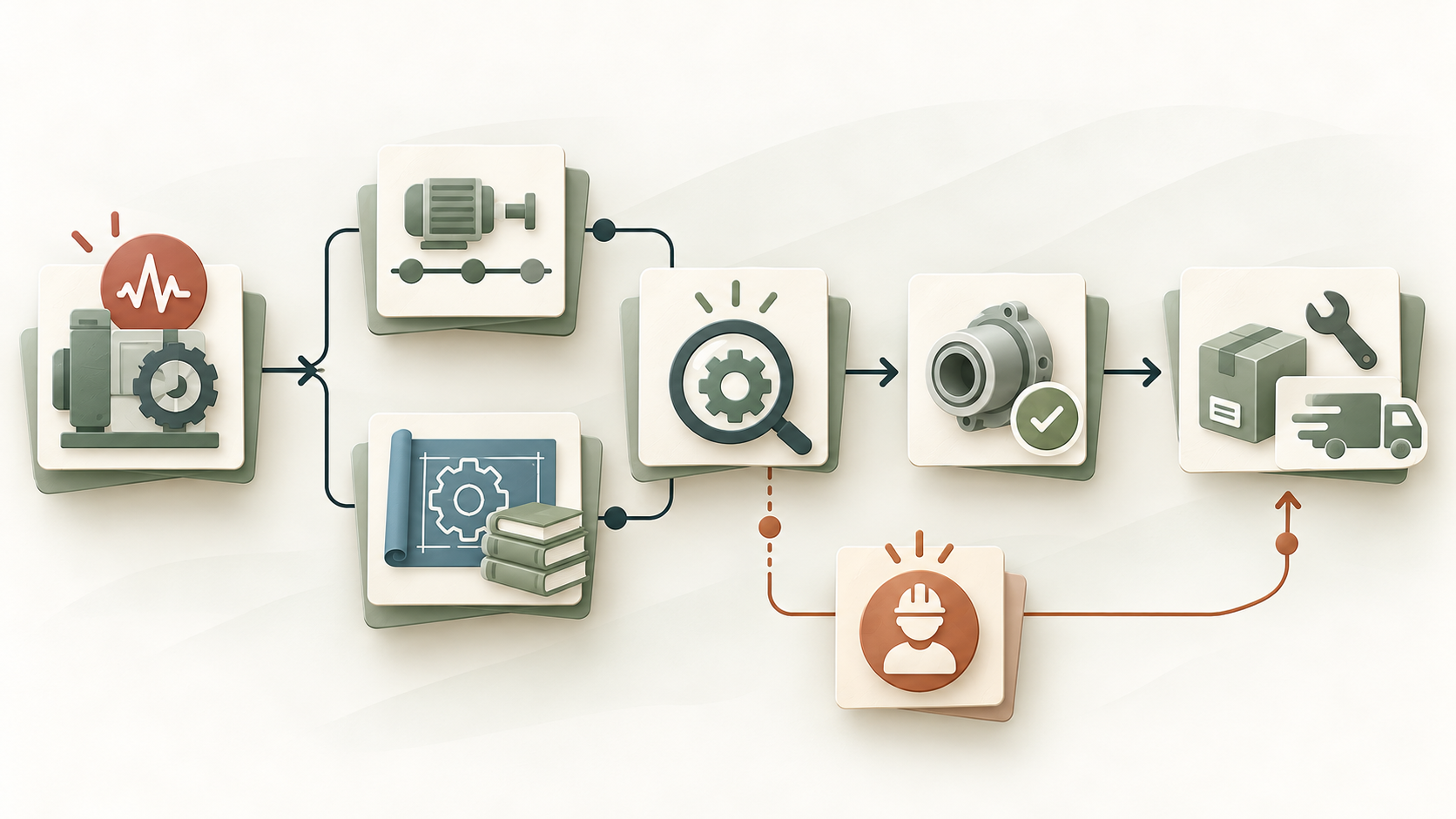
Maintenance requests, error patterns and repair histories are linked with engineering knowledge and design standards. Agents support diagnostics, spare part identification and order dispatch.
Procurement and operations
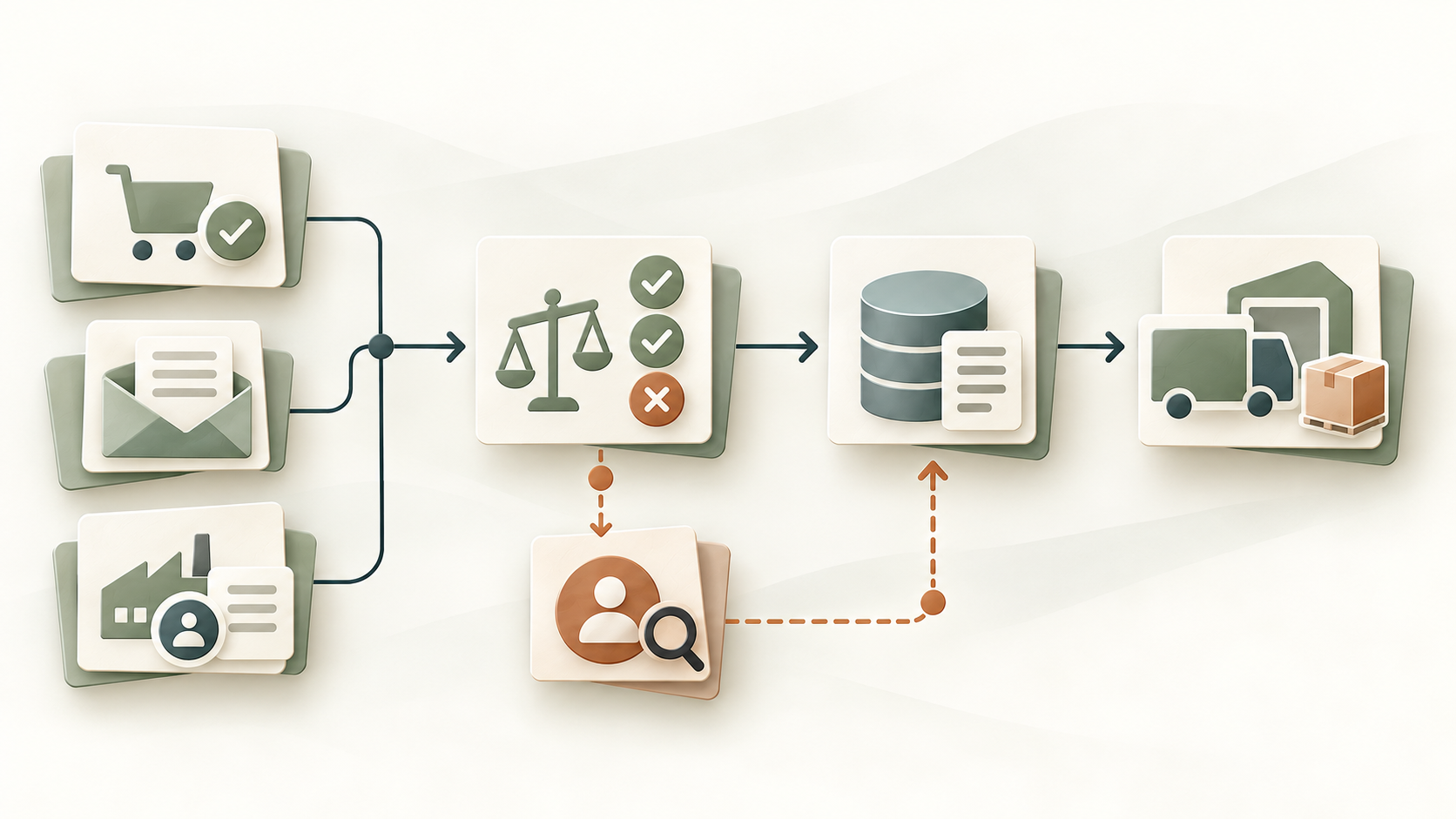
Order processes, supplier communication, order confirmations and deviations are partly automated. Agents collect data, check conditions and prepare decisions.
Compliance and legal
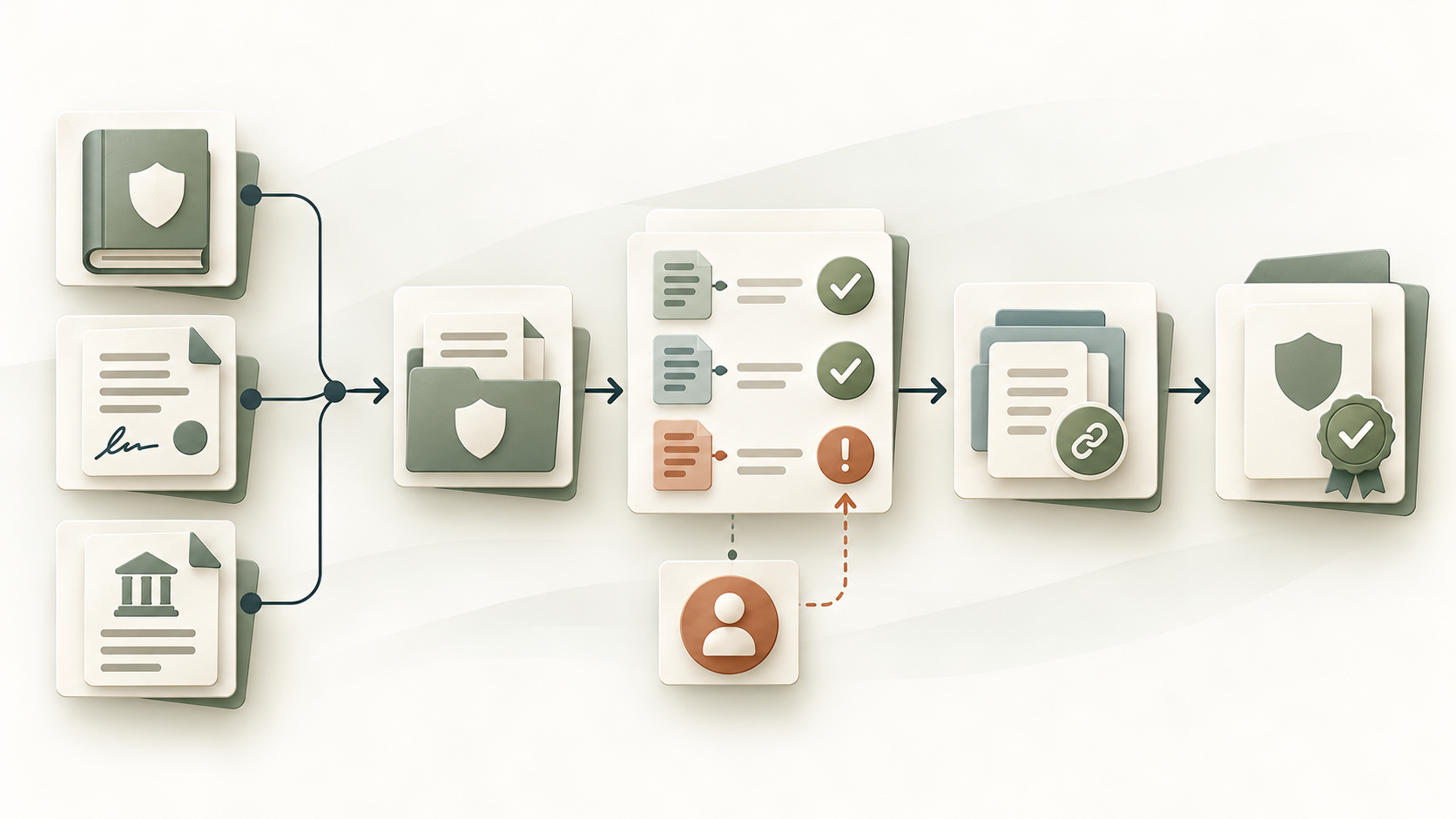
Policies, contracts and regulatory requirements are linked with operational cases. Agents support audits, evidence collection and the preparation of audit documentation.
Comparing approaches
How AI agents differ from classic RPA, standard copilots and ad-hoc in-house development — with clear control over autonomy and system access.
AI agents vs. alternatives
| Criterion | Kaufman AIS | RPA and workflow tools | Standard SaaS copilots | In-house build without architecture |
|---|---|---|---|---|
| Understand multi-step tasks with context | Fixed rules only | Partially, product-dependent | Possible, high effort | |
| Access to company knowledge and systems | Limited to connected UI | Mostly one ecosystem | Individual, hard to maintain | |
| Approvals and controlled autonomy | Via fixed workflows | Limited configuration | Rarely planned from the start | |
| Audit and traceability | Process logs | Vendor-dependent | Project-dependent | |
| Extend with new use cases | Reprogramming required | Product-dependent | Open but expensive |
Security, GDPR and controlled autonomy
Agents must not do everything that is technically possible. Security, data protection and governance are core elements of our architecture, not afterthoughts.
- Operation in European data centres or on premise, optionally with private language models without data flowing to external providers.
- Dedicated technical identities and role models for every agent, with clearly bounded rights in the target systems.
- Approval steps for high-impact actions, for example orders, contract changes or external communication.
- Complete logging of every agent step, including the referenced knowledge sources.
- GDPR compliance, support for requirements from BaFin, MaRisk, DORA, NIS 2, MDR, ISO 27001 and TISAX.
- Clear separation between autonomous steps, suggestions to humans and mandatory approvals.
Frequently asked questions about AI agents and AI workflows
How do AI agents differ from classical workflow automation?
Classical workflows follow predefined rules. AI agents extend these rules with understanding, decision-making and knowledge access. They can interpret texts and documents, plan multiple steps, justify their actions and react to exceptions. We combine both worlds so that you use deterministic stability and intelligent decision-making where each makes sense.
How do n8n and other workflow tools fit into the architecture?
n8n is for us a proven building block for integration and deterministic steps. We combine n8n with agent frameworks such as LangGraph or CrewAI so that workflows that require understanding and decisions are taken over by agents. Other tools such as Microsoft Power Automate, Camunda or Make are used when the existing landscape suggests it.
Which language models do you use?
We select models along use case, compliance and economics. Typically we use strong models from leading providers for complex tasks, complemented by European model offerings and private open source models, for example from the Llama or Mistral families, for sensitive content or on-premise scenarios. Details on model and architecture choices are available on the Sovereign AI page.
How do you prevent agents from causing errors?
Agents operate in clearly defined roles, with restricted technical rights and explicit escalation and approval points. High-impact actions go through approvals. Every step is logged. When required, agents initially run in a suggestion mode in which employees confirm actions before they become automated.
Can agents access existing knowledge bases?
Yes. We connect agents with RAG systems and enterprise knowledge systems so they generate answers and actions based on your verified data. Permissions from the source systems are inherited completely.
What does a typical entry point look like?
We recommend a clearly scoped, business-relevant use case, for example processing incoming orders, handling recurring service requests or preparing proposals. This delivers early productive results and forms the basis for a broader Agentic AI strategy.
Can multiple agents collaborate in one process?
Yes. We design multi-agent architectures in which specialized agents split tasks, align results and escalate to humans when needed. One agent can research, another draft outputs and a third execute system actions. Orchestration runs through defined interfaces and traceable handovers.
How do you measure the value of AI agents?
Together we define measurable metrics, for example processing time, throughput, error rate or approval effort. In suggestion mode, effects can be validated before full automation. This keeps value transparent and steerable along the roadmap.
Do we need our own data science team?
No. We handle conception, implementation and operations. Your business units provide process knowledge and approvals, IT provides interfaces and governance. On request we train your teams to work with agents and workflows so you can evolve the system long term.
Introduce Agentic AI for your processes in a structured way
We look at your work and tools. Then we pick a good first project with you. It should help soon and grow as you need it.
Contact
Tell us about a process you want to improve. We will map its data and systems, then discuss a secure first step for AI.