Sovereign AI
Sovereign AI for European enterprises with data sovereignty and compliance requirements
Sovereign AI combines the capability of modern language models with a clearly controlled European operating model. Kaufman AIS implements AI systems that are operated in European infrastructure, are GDPR compliant and, on request, work fully without data flowing to external providers.
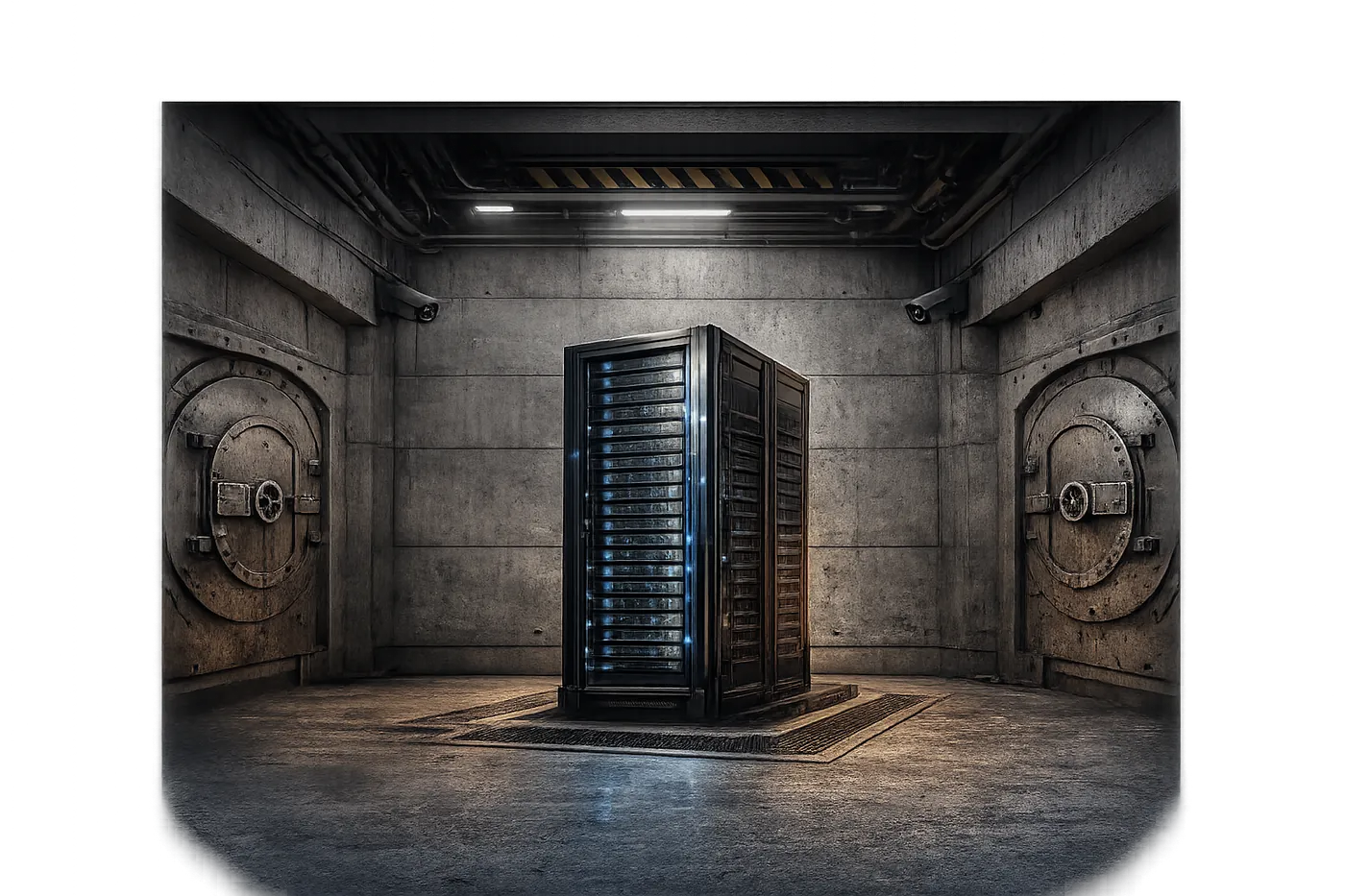
Why sovereign AI has become a strategic question in Europe
Companies that embed AI into core processes face a question that can no longer be delegated to IT. Where do data emerge, where are they processed, who has access and on what legal basis. This question concerns the executive board, data protection, risk management and business units equally.
- Sensitive corporate data often cannot, for regulatory reasons, flow to arbitrary public cloud regions or to arbitrary model providers.
- Contracts and data protection requirements demand clear statements on processing locations, subcontractors and third country transfers.
- Sectoral regulation such as BaFin, MDR, NIS 2, DORA or ISO 27001 demands robust evidence of control and auditability.
- Geopolitical developments increase the risk of dependencies on individual non-European providers.
- Business units demand high-performance AI without abandoning compliance principles.
The Kaufman AIS solution
We design AI systems that are operated on European infrastructure, preserve your company's data sovereignty and fit seamlessly into your existing security and governance processes.
- Operation in European data centres, in your private cloud or fully on premise.
- Use of private language models so that queries and content do not leave your sphere of responsibility.
- Clear contractual foundations with European subcontractors and a transparent data processing map.
- Integration into your existing identity, rights and audit processes.
- Architecture that clearly separates the sovereign core operation from complementary services and remains verifiable.
The benefits of sovereign AI for your company
Sovereign AI is not only a regulatory answer. It is a strategic foundation for AI use in areas where trust and control are decisive.
Building blocks of a sovereign AI architecture
Sovereign AI is not a single product but an architecture. Kaufman AIS combines the building blocks into a coherent overall picture that fits your IT, your compliance and your use cases.
European hosting and operation
We rely on European data centre providers, own infrastructure or private cloud environments. Processing locations are documented and contractually secured.
Private and open language models
We operate open language models in your environment, combine them with controlled European model offerings or integrate existing models where compliance allows it.
Identity and authorization layer
AI systems are integrated into your existing identity management, typically via Azure Active Directory or comparable directory services. Permissions from source systems are enforced consistently.
Encryption and key management
Content is encrypted in transit and at rest. Key material remains in your control, optionally via a Hardware Security Module.
Governance and auditability
Queries, answers and sources are logged in an audit-grade way. You receive reports for data protection, audit and risk management.
Integration with existing AI building blocks
Sovereign AI is compatible with RAG systems, Enterprise Knowledge Systems, digital assistants and AI agents. It is the foundation on which these building blocks are operated securely.
Sectors with particularly high demand for sovereign AI
We apply sovereign AI architectures particularly in sectors where regulatory pressure, data sensitivity and strategic AI demand converge.
Finance and banking

Requirements from BaFin, MaRisk and DORA demand clear control over processing, outsourcing and auditability. Sovereign AI enables productive AI use under these conditions.
Healthcare and life sciences
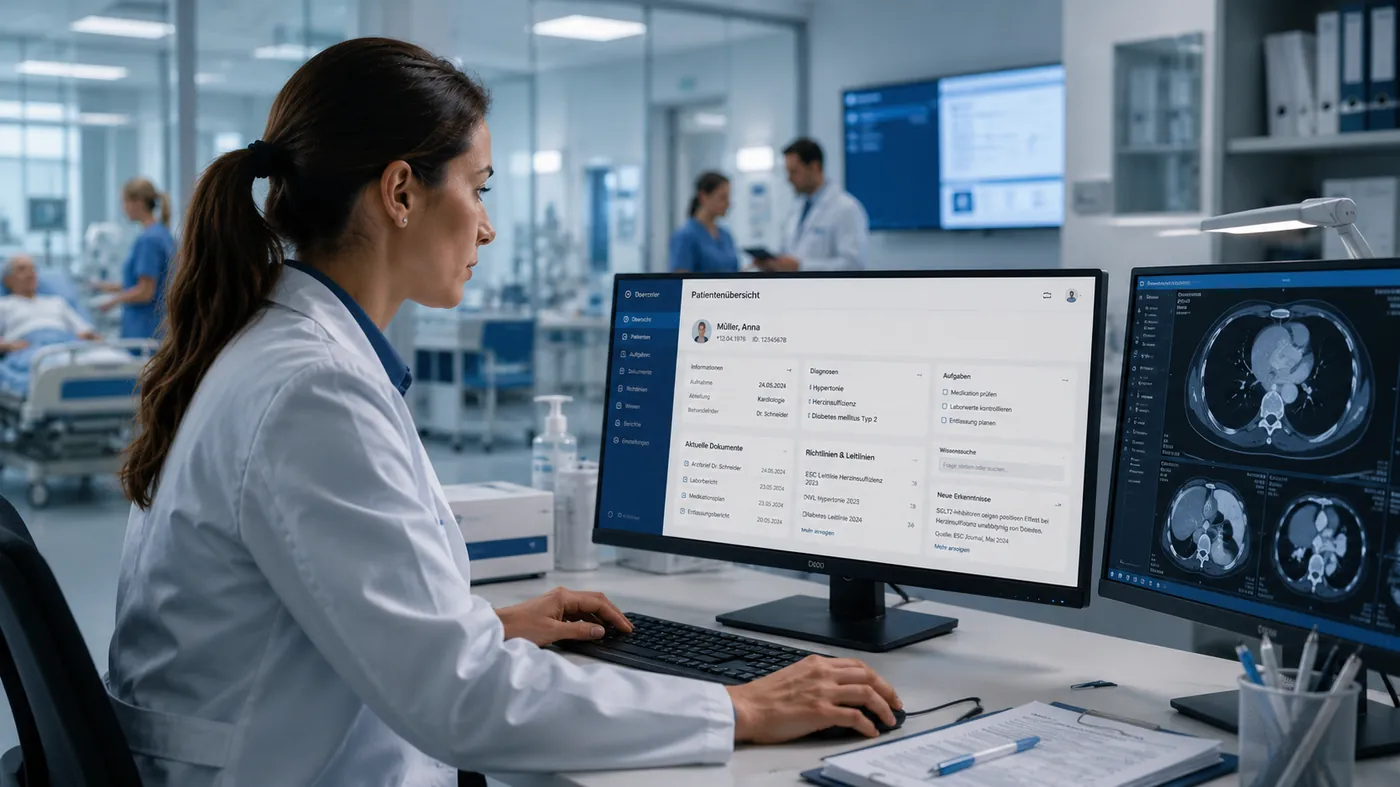
Patient data, study results and quality documentation require particularly high protection levels. Sovereign architectures create the foundation for AI in these areas.
Public sector and critical infrastructure

Authorities, utilities and operators of critical infrastructure are bound by clear sovereignty requirements. We implement architectures that meet these requirements.
Industry and mechanical engineering

Design knowledge, supplier data and know-how are business-critical assets. Sovereign AI protects them even during productive AI use in engineering and service.
Professional services

Law firms, auditors and consultancies process highly sensitive client data. Sovereign AI creates the precondition for AI assistants in these houses.
Logistics and transport
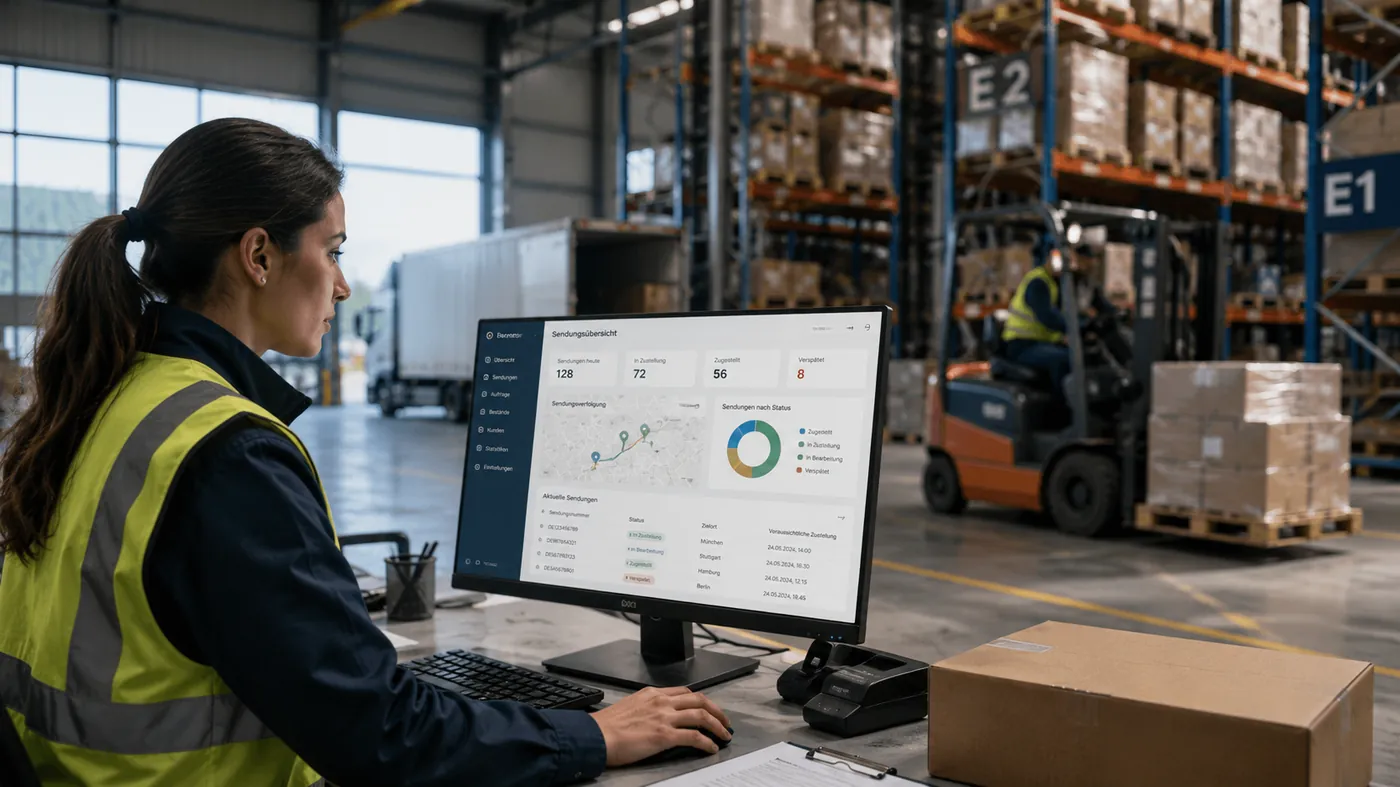
Shipping rules, customs information, contracts and supplier data are distributed and sensitive. Sovereign AI enables assistance in dispatch and customer service without giving up control over data and processing.
Comparing operating models
How sovereign AI differs from public cloud AI, standard SaaS assistants and ungoverned self-hosting — especially for regulated and data-sensitive companies.
Sovereign AI vs. cloud and SaaS
| Criterion | Kaufman AIS | Public cloud AI | Standard SaaS AI | Self-hosting without governance |
|---|---|---|---|---|
| Data stays in EU or on-premise | Often US or globally distributed | Vendor-dependent | Possible but risky | |
| Private or selectable language models | Mostly vendor models only | Fixed by product | Technically possible | |
| GDPR and audit traceability | Contract and configuration matter | Partially documented | Rarely complete | |
| No third-party training on your data | Often restricted in terms | Product-dependent | Your own responsibility | |
| Scalability and professional operations | Often an operations bottleneck |
Architecture and technology freedom
| Criterion | Kaufman AIS | Public cloud AI | Standard SaaS AI | Self-hosting without governance |
|---|---|---|---|---|
| Free choice of LLM | Limited | Usually no choice | Open but no standard | |
| Container and open source operation | Rarely complete | Not intended | Possible, maintenance-heavy | |
| Integration with ERP, DMS and line-of-business systems | Via APIs, data flow critical | Ecosystem-dependent | Individual | |
| Modular extensibility | Platform-dependent | Feature set limited | Architecture must be built yourself |
Security, GDPR and regulatory positioning
Sovereign AI is concretely verifiable. Kaufman AIS documents architecture, processing map and controls so that data protection, audit and external auditors can work robustly.
- Processing exclusively in European data centres or in own infrastructure, fully documented.
- GDPR compliant data processing, clear separation between controller and processor.
- Support for requirements from BaFin, MaRisk, DORA, NIS 2, MDR, ISO 27001 and TISAX.
- Roles, rights and tenant separation at the level of the knowledge base and model calls.
- Auditable logging of all access, queries and answers.
- Clear exit strategies and data portability so the system remains exchangeable.
Frequently asked questions about sovereign AI
What does sovereign AI mean concretely?
Sovereign AI means that a company or organization can at any time decide over data, models and infrastructure of its AI systems. Processing happens in a controlled, typically European environment. Subcontractors, processing locations and models are transparent and verifiable.
Do we have to give up existing language models?
Not necessarily. Sovereign architectures typically combine private models in own infrastructure with selected European model offerings. Existing models from external providers can continue to be used in clearly scoped use cases as long as compliance allows it.
Is sovereign AI economically viable for midmarket companies?
Yes. We design architectures that start with a manageable entry point and grow along productive use. On-premise components can be deployed selectively where really needed, other building blocks in European cloud infrastructure.
Which regulatory requirements are addressed?
We support GDPR compliance as well as specific requirements from BaFin, MaRisk, DORA, NIS 2, MDR, ISO 27001 and TISAX. Which requirements apply in detail depends on sector and use case.
How does sovereign AI differ from public cloud AI?
Public cloud AI offers fast access to powerful models, but often without full control over processing locations, subcontractors and data flows. Sovereign AI complements these possibilities with a controlled layer in which sensitive content and core processes are processed.
What is the most sensible way to start?
We recommend starting with a scoped, business-relevant use case in a sovereign architecture. This produces early productive results and at the same time the foundation for a company-wide, verifiable AI strategy.
What hardware is needed for private language models on premise?
Requirements depend on model size and load. For many enterprise use cases, dedicated GPU servers or a private cloud with clearly defined capacity are sufficient. We dimension infrastructure along your use cases and scale step by step instead of over-provisioning from day one.
How are model updates rolled out without risking operations?
Updates run through separate environments with tests on representative queries. New model versions go live only after approval. Rollback paths and documented changes are a fixed part of operations.
Is GDPR compliance enough for regulated sectors such as financial services?
GDPR is the foundation but not sufficient on its own for many sectors. We additionally address BaFin, MaRisk, DORA, NIS 2 and other requirements relevant to your context. Architecture, logs and contracts are documented so audits and reviews remain robust.
Sovereign AI architecture for your company
We analyze your regulatory framework, your IT landscape and your AI use cases and design an architecture that brings together capability, data sovereignty and economic viability.
Contact
Tell us about a process you want to improve. We will map its data and systems, then discuss a secure first step for AI.