Shopware Development
Intelligent Shopware development with SAP as ERP backbone
Kaufman AIS develops Shopware stores for midmarket and larger enterprises in industry, B2B trade and brand manufacturer environments. We focus exclusively on Shopware 6, handle demanding migrations from older platforms and integrate the shop deeply into existing SAP landscapes. We also deliver AI-powered plugins for conversion optimization, design, SEO, price intelligence, recommendations and conversational AI that marketing and sales teams can use without additional IT capacity.

Why Shopware projects fail in medium-sized businesses
Online shops in B2B and brand direct sales are not a marketing tool, but a sales channel with high requirements. Where product ranges, customer prices, availability and order processing come from the ERP, the quality of the integration determines success.
- Outdated platforms such as Magento 1, Shopware 5 or SAP Hybris are reaching the end of their life cycle and blocking growth.
- Master data, prices and availability are in SAP, but interfaces have grown over the years, are undocumented and prone to errors.
- B2B requirements such as customer-specific prices, graduated prices, budgets and approvals are underestimated in standard projects.
- Internationalization, multiple sales channels and different legal systems overwhelm many implementation partners.
- After the go-live, a resilient operational organization is missing and growth falls short of expectations.
The Kaufman AIS solution
We build Shopware 6 shops that are designed to operate in complex corporate landscapes. Our focus is on clean integration with SAP and on sustainably maintainable architecture, not on short-term effects.
- Conception, architecture, development and operation from a single source, with clearly documented interfaces.
- Migrations from Magento, Shopware 5, SAP Hybris and in-house developments, including data transfer, URL mapping and SEO backup.
- Deep integration with SAP S 4HANA and SAP ECC for master data, prices, availability, orders, deliveries and invoices.
- B2B functionality along real sales processes, from customer hierarchies to price lists to approval workflows.
- Optional AI components for search, product recommendations, service communication and internal knowledge work based on your shop data.
What advantages a professional Shopware platform creates
A well-built Shopware 6 shop is a platform for scalable business, not a single IT project. The advantages can be seen equally in sales, marketing, operations and IT.
Clear data sovereignty

SAP remains the leading system for master data and processes. The shop reflects this data instead of duplicating it or creating its own truths.
B2B capable sales processes

Customer hierarchies, price lists, budgets, releases and order approvals are mapped along your real sales logic.
Internationalizable

Multiple sales channels, languages, currencies and tax models run on a technical basis. International expansion becomes a configuration task, not a new project.
Scalable performance

Caching, asset strategy, search and SAP interfaces are designed so that even large catalogs and high load peaks can be easily served.
AI supported refinement

We specifically add AI functions to Shopware shops, such as semantic product searches, personalized recommendations or automated service responses based on your product information.
Maintainability and operation
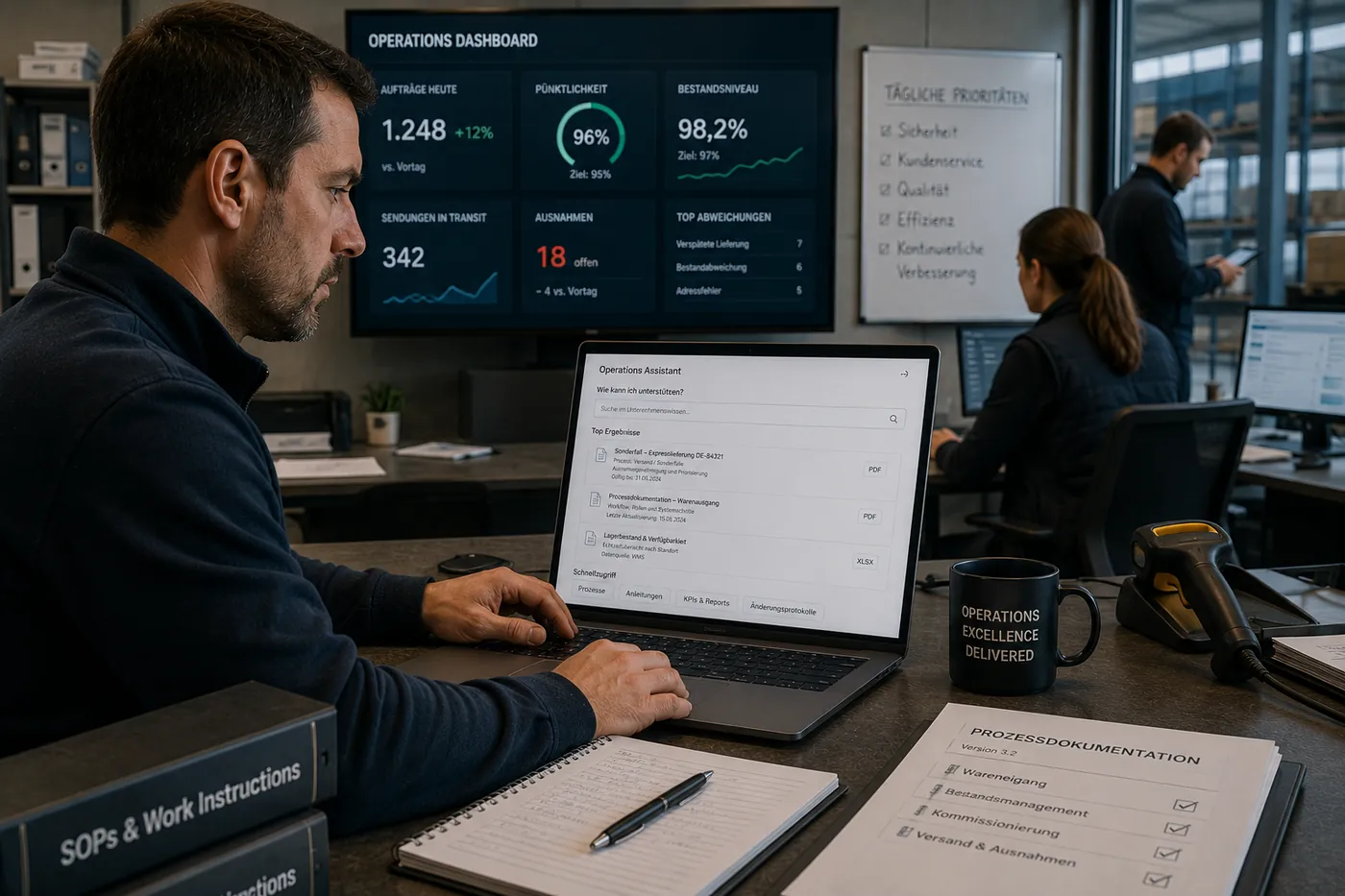
Clear architecture, automated tests, clean release management and monitoring ensure that the shop remains maintainable and expandable even after years.
Technological foundations of our Shopware projects
We focus on Shopware 6 and build the platform along established architectural patterns. This focus ensures depth, speed and predictable quality.
Shopware 6 as a platform
We only use Shopware 6 and use the platform including administration, storefront, rule builder, flow builder, app system and API layer. We consistently move within the planned expansion points and avoid core changes.
Headless and API first as needed
Where touchpoints, performance requirements or brand architecture require it, we rely on headless setups via the Shopware Store API. Hybrid models in which classic storefronts and headless front ends coexist are also possible.
SAP integration
We integrate Shopware with SAP S 4HANA and SAP ECC. Synchronous and asynchronous interfaces via REST and web services, supplemented by middleware components, are common, depending on the existing architecture. Master data, prices, availability, orders, delivery notes and invoices are kept consistent between ERP and shop.
PIM, DAM and search layer
Product information from PIM systems, media from DAM solutions and a high-performance search layer, often based on Elasticsearch or OpenSearch, flow cleanly into the platform. If requested, we can add a semantic AI layer to the search.
B2B Suite and Extensions
For B2B scenarios, we use the Shopware B2B functionality, supplement it with our own extensions and implement complex requirements such as multi-location trading, foreign companies or multi-stage approvals.
AI modules for Shopware
We use RAG-based service assistants based on your product data, supplement the search with semantic components and integrate agents for recurring tasks in operations and service. Details about our knowledge architectures can be found on the Enterprise Knowledge System page.
Shopware plugins and AI services go beyond the standard
In addition to implementation and SAP integration, we deliver tried and tested Shopware plugins that relieve the burden on marketing, e-commerce and sales. They work directly in the shop, do not require any additional developer resources and can be retrofitted into existing Shopware 6 installations.
Free GEO quick check for your Shopware store
Generative Engine Optimization (GEO) measures how well your store is found, understood and cited by AI systems such as ChatGPT, Perplexity or Google AI Overviews. With the [GEO Audit from Kaufman AIS](https://geo-audit.kaufman-ais.com/) you get a weighted score, dimensions and prioritized actions in minutes — no sign-up, based on a representative sample of up to seven pages.
- Five dimensions — GEO Readiness, Entity Layer, AI Technical, SEO Foundation and Authority — combined in one score.
- The same scoring logic as the full GEO Audit, including interactive report and PDF.
- Ideal as a baseline before migration, plugin rollout or a GEO/SEO content project.
Typical areas of application and migrations
We work with manufacturers, brand companies and B2B distributors whose shop is a central sales channel. Migrations are often the reason for a fundamental realignment.
Comparison of implementation approaches
How a professional Shopware platform differs from classic agency projects, standard Shopware implementations without SAP depth and isolated in-house development.
Shopware with Kaufman AIS vs. alternatives
| criterion | Kaufman AIS | Classic agency | Standard Shopware agency | In-house development |
|---|---|---|---|---|
| Focus on Shopware 6 and SAP integration | Often generalist | Shopware yes, SAP rarely deep | High personal effort | |
| B2B processes and customer hierarchies | Project dependent | Often only basic B2B | Individual, maintenance-intensive | |
| Migrations with SEO and data transfer | Possible, not always standard | Partially | Risky with no experience | |
| AI extensions in the existing shop | Rarely core competence | Rarely | In-house development necessary | |
| Long-term operation and expandability | Often end of project | Maintenance contract possible | Internal IT load |
Strategic use of the platform
| criterion | Kaufman AIS | Classic agency | Standard Shopware agency | In-house development |
|---|---|---|---|---|
| Shop as a scalable sales channel | ||||
| International rollouts on one basis | Possible | Possible | Effort intensive | |
| Clear architecture instead of uncontrolled plugins | Quality varies | Often plugin focus | Risk without governance | |
| Release management and monitoring | Not always included | Optional | Own organization required |
Security, compliance and operations
An online shop processes orders, customer data and payment information. We operate Shopware shops according to professional security standards and with clear operating processes.
- Hosting in European data centers or in your own infrastructure, fully GDPR compliant.
- PCI DSS compliant connection to established payment providers, no storage of sensitive payment data in the shop.
- Roles and rights models in administration, separated into sales, marketing, service, operations and IT.
- Automated backups, tested recovery processes and clearly defined release management.
- Monitoring, logging and alerting for shop, interfaces and SAP connection.
- Auditable logging of security-relevant actions, especially in B2B contexts with release processes.
Frequently asked questions about Shopware development
Why does Kaufman AIS focus exclusively on Shopware?
We are convinced that a focused choice of platform delivers better results in depth than a broad toolbox. Shopware 6 offers a modern architecture, a clear expansion model and strong European roots. This focus allows us to actually master Shopware instead of working in several worlds at the same time.
What migrations do you typically perform?
We regularly migrate from Magento 1 and 2, from Shopware 5, from SAP Hybris and from in-house developments to Shopware 6. Migrations include data transfer, URL mapping for SEO security, rebuilding the business logic and a structured cut over process.
How do you integrate SAP with Shopware?
We work with SAP S 4HANA and SAP ECC. Depending on the existing architecture, interfaces are implemented via standard SAP mechanisms such as OData, BAPIs and middleware solutions. What is common is the synchronization of master data, prices, availability, orders, deliveries and invoices, supplemented by asynchronous event flows for critical performance points.
Can you also deliver pure AI extensions for existing Shopware shops?
Yes. Existing Shopware 6 installations can be specifically supplemented with AI components, for example a semantic search, a service assistant based on your product information or agents for recurring tasks in operations and service. Details can be found on the AI agents page.
What will operations look like after Go Live?
We take over ongoing operations including hosting, monitoring, maintenance, security updates and further development. Releases run through a clearly defined process with automated tests, documented release and traceable rollout.
Which hosting models do you work with?
We operate Shopware shops in European data centers or in private cloud environments. If necessary, we integrate operations into existing company infrastructures, for example On Premise or in a hybrid architecture.
Can the Shopware plugins also be retrofitted in existing shops?
Yes. Conversion optimization, design plugin, GEO/SEO, price intelligence, recommendations and conversational AI can be integrated into ongoing Shopware 6 installations without rebuilding the shop. We check your plugin landscape, theme structure and interfaces and plan the introduction step by step.
What is the GEO Audit and how does it relate to Shopware?
The [GEO Audit](https://geo-audit.kaufman-ais.com/) is our free entry tool for e-commerce — it measures your store's AI visibility from a sample (homepage, categories, products). On this page you can start a quick check by domain; the full report with PDF is available at geo-audit.kaufman-ais.com. To implement improvements in the shop we offer the GEO/SEO plugin and consulting from one source.
Do we need developers for A/B testing or design changes?
No. A/B tests are automatically rolled out via canary deployment upon release. Design changes are made promptly in the plugin. IT and development remain responsible for architecture, SAP integration and releases, not for daily optimizations in the shop.
How long does a typical migration to Shopware 6 take?
This depends on the amount of data, interfaces and individualizations. Clearly defined projects are often productive in three to six months, complex landscapes with SAP connections and extensive business logic can take longer. We plan with milestones, parallel operation and a structured cut over.
Do you support Shopware 6 Self hosted and Shopware Cloud?
Yes. We implement and operate Shopware 6 in our own infrastructure, European data centers or in the Shopware Cloud, depending on your control, integration and operation requirements.
How do you deal with Shopware updates and security patches?
Updates run via a defined release process with tests in staging, automated checks and documented release. Security patches are installed in a prioritized manner. Custom plugins and SAP interfaces are checked before every rollout.
Start the Shopware project in a structured manner
Whether migration, rebuilding, Shopware plugins or targeted AI expansion. We analyze your existing platform, your SAP landscape and your sales processes and suggest a viable path.
Contact
Tell us about a process you want to improve. We will map its data and systems, then discuss a secure first step for AI.